
Your Team Made 200 Decisions Before Lunch. Don’t Make Snack Time #201.
If you manage people in a Hoboken tower or a Midtown coworking floor, you already know the 3pm slump isn’t really about sugar. It’s about decision fatigue — the cognitive tax of choosing all day, every day. By mid-afternoon, your engineers, analysts, and account managers have burned through their willpower budget. The last thing they want is a wall of 60 snack options blinking at them.
I’ve been stocking breakrooms across Bergen County, Hudson County, and parts of Manhattan for years, and the pattern is consistent: simpler selection drives more sales, more satisfaction, and noticeably less complaining. Counterintuitive, but real.
What Decision Fatigue Actually Looks Like in a Breakroom
You’ve seen it. Someone walks up to a packed snack wall, scans for 45 seconds, makes a face, and walks back to their desk empty-handed. They didn’t find nothing they liked — they found too much. That’s the paradox of choice in action, and in a workplace context it has a real cost:
- Skipped snack breaks mean energy crashes and lower afternoon output
- Reduced breakroom traffic means less of the casual collision time that drives collaboration
- Frustration with the amenity gets blamed on HR, not on the 47 nearly-identical chip bags
The NJ/NYC Wellness Context
Corporate wellness culture in this region has matured fast. A Class A office in Jersey City or a creative agency in SoHo isn’t competing on ping-pong tables anymore — they’re competing on whether the workday feels manageable. I’ve had facility managers in Fort Lee tell me they shifted their entire breakroom philosophy after watching tenants in newer Cliffside Park residential-conversion buildings demand curated, intentional food options instead of overwhelming variety. The shift mirrors what’s happening at grocery: shoppers want edited, not endless.
How We Actually Edit the Selection
When we set up a micro market or smart cooler for a new client, we don’t fill it with everything. We build around a framework that respects how a tired brain shops at 3:15pm:
- One clear option per craving. One excellent dark chocolate bar, not five. One protein cookie, not three. The brain stops bargaining and just picks.
- Tiered by intent. A clear “better-for-you” shelf, a clear “comfort” shelf, a clear “meal replacement” shelf. People know which mode they’re in.
- Local rotation. We swap roughly 15-20% of SKUs monthly based on what’s actually moving in your specific location. A trading desk in Lower Manhattan and a marketing team in Englewood Cliffs do not eat the same things — and we have the sales data to prove it.
The Specific, Actionable Insight
Here’s something a generic wellness article won’t tell you: the optimal SKU count for a single smart cooler in an office of 40-150 people is between 28 and 36 items. Below 28, people feel like there’s “nothing here.” Above 36, sell-through per SKU drops, freshness suffers, and decision fatigue creeps back in. We’ve tested this across dozens of NJ and NYC sites. If your current setup has 50+ items crammed in, you’re not being generous — you’re creating friction.
What This Looks Like in Practice
A typical edited cooler we install in a Bergen County office might include:
- 4-5 cold brews and functional beverages
- 3-4 sparkling waters
- 2-3 yogurt or overnight-oats cups
- 4-5 protein bars (one premium, one budget, one plant-based)
- 3-4 fresh fruit options
- 5-6 savory snacks (chips, nuts, jerky)
- 3-4 sweet options (one chocolate, one cookie, one indulgent)
- 2-3 lunch-ready items (salads, wraps, hummus packs)
That’s 28-34 SKUs. Enough variety to cover real cravings. Few enough that a depleted brain at 3pm can choose in under 10 seconds.
Why This Is an HR and Facilities Issue, Not Just a Vending One
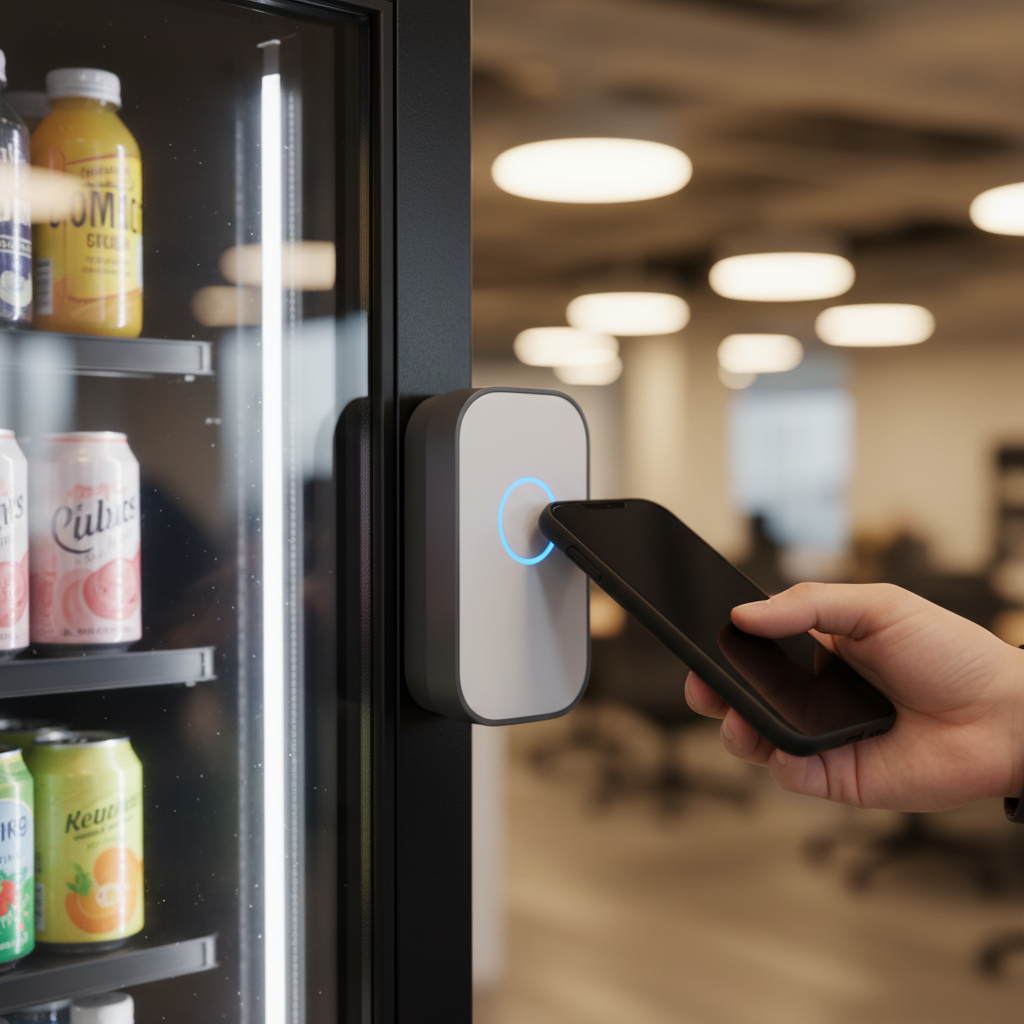
If you’re measuring breakroom amenities by square footage filled or number of products visible, you’re optimizing the wrong metric. The right metric is repeat usage per employee per week. A well-edited setup with the right contactless smart cooler drives 2-3x the repeat usage of an over-stuffed one — same footprint, same cost structure, dramatically better tenant or employee experience.
This is exactly how we approach every install we manage across the metro area. We’re not trying to maximize SKU count for show. We’re trying to make the 3pm decision easy, so your team can save their good thinking for the work that actually matters.
If your current breakroom feels more like a Duane Reade aisle than a curated amenity, that’s worth a conversation. The fix is usually fewer products, not more.