
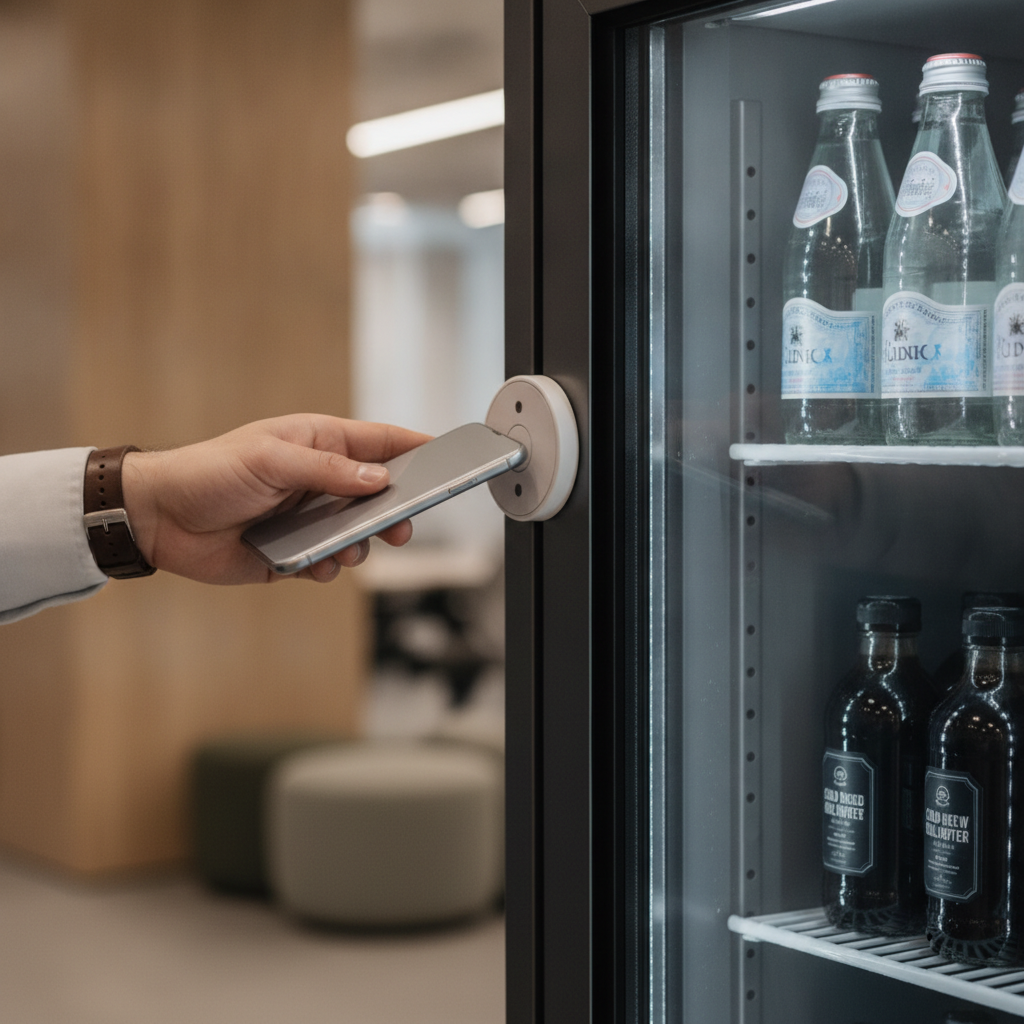
If you run a coworking space in Jersey City, the break room isn’t just a perk — it’s part of the tour. Members deciding between your floor and another one a few blocks over notice whether the snack situation feels like a real amenity or an afterthought. After stocking and servicing rooms across Jersey City coworking floors, here’s what we’ve learned about what works in this specific market.
Downtown vs. Journal Square: Two Different Member Bases
The biggest mistake I see coworking operators make is treating Jersey City as one market. It isn’t. Downtown Jersey City coworking — the Newport, Exchange Place, and Grove Street buildings — skews toward finance refugees from Manhattan, remote tech workers, and consultants. They want cold brew, sparkling water, protein bars, and they’ll pay $4 for a quality item without flinching. They tap their phone and move on.
Journal Square coworking has a different rhythm — more freelancers, creatives, early-stage founders, and a heavier lunchtime crowd because there are fewer quick-lunch options right outside the door than in Newport. That means fresh food matters more here. Sandwiches, salads, and microwaveable meals actually move in Journal Square in a way they don’t always in Downtown locations where members walk to Hudson Eats.
The Actionable Insight
If you operate in Journal Square, dedicate at least 30% of your cooler space to lunch SKUs — not just snacks and drinks. In Downtown buildings, you can flip that ratio and lean heavier on grab-and-go beverages and premium snacks. Same operator, same equipment, different product mix.
Why Traditional Vending Doesn’t Fit Coworking
Coworking members aren’t factory workers on a 15-minute break. They wander into the kitchen between Zooms, expect to see what they’re buying, and don’t want to argue with a coil that didn’t drop their granola bar. An old-school snack machine in a coworking lounge looks dated the moment you install it — and tour groups notice.
What actually fits the aesthetic:
- Smart coolers — glass-door fridges where a member taps a card or phone, opens the door, grabs whatever they want, and closes it. Charged automatically. No interface to learn.
- Micro markets — an open shelf-and-cooler setup with a single self-checkout kiosk. Works beautifully in larger floors with a dedicated kitchen or lounge zone.
For floors above roughly 8,000 sq ft or 150+ desks, a micro market tends to pay off because the variety justifies the footprint. Below that, one or two smart coolers usually handle demand without dead inventory.
Space, Power, and the Stuff Operators Forget to Ask
A few hard-learned operational notes for Jersey City buildings specifically:
- Freight elevators in Newport high-rises — most require COIs filed 48+ hours in advance and have restricted delivery windows (often before 10 AM). Build that into your installation timeline.
- Power — a smart cooler needs a standard 120V dedicated outlet within six feet. Sounds obvious, but I’ve walked into beautiful build-outs where the only outlet is across the room behind a couch.
- WiFi — smart coolers and micro market kiosks need network connectivity. If your guest WiFi has a captive portal that re-authenticates daily, the equipment will drop offline. Ask for a separate SSID or a hardwired line.
- Trash — wherever you put the cooler, the trash and recycling need to be within ten feet, or you’ll find empty cans on every surface in the lounge.
What It Should Cost the Operator
For most coworking spaces, the equipment, installation, restocking, and service should cost you zero. The vendor makes money on product sales; you provide the space and power. What you should negotiate for:
- A clear restocking cadence (weekly is standard; twice-weekly for busy Downtown floors)
- The right to swap out underperforming SKUs after the first 30 days
- A small free-product allowance for member events or tour days — this is reasonable to ask for and often gets agreed to
- Remote monitoring so you’re not the one calling to say the cold brew is out
Tour-Day Reality Check
Walk your own break room as if you were a prospective member on a Tuesday at 2 PM. Is the cooler full? Are there crumbs on the counter? Is there one sad bagel left from this morning? The break room is the second-most photographed area on coworking tours after the lounge. Treat it that way, stock it for your actual member base — Downtown finance crowd vs. Journal Square creative crowd — and it stops being a cost center and starts being a closing tool.