
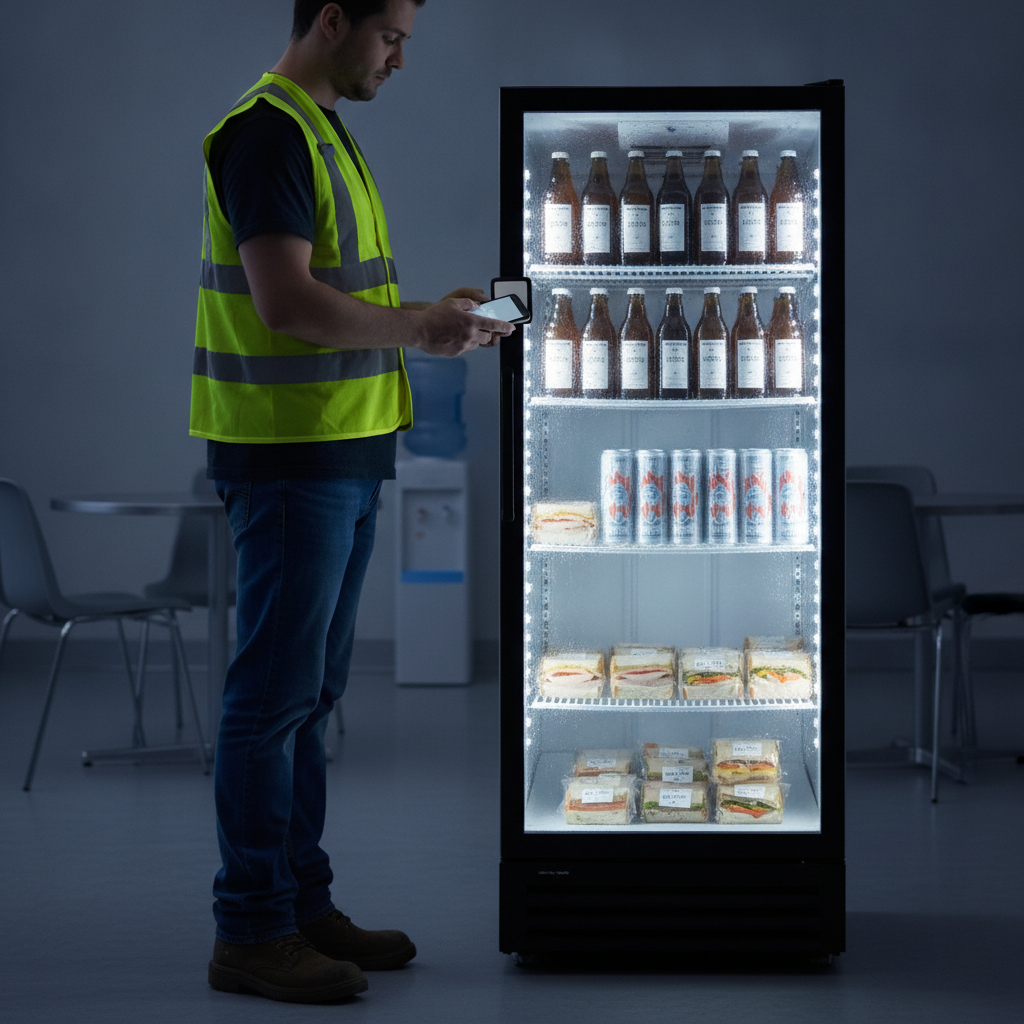
The 2 a.m. Problem Every Warehouse Ops Manager Knows
If you run a distribution center, you already know what happens around 1:30 or 2 a.m. Pickers slow down. Forklift drivers start hunting for coffee. Someone gets in their car and drives to the 24-hour gas station on Route 3, comes back late, and the whole line feels it. Multiply that by 30 or 40 workers and you’re bleeding productive minutes every single shift.
Around Secaucus and Newark’s logistics corridor — the cluster of cross-docks off Meadowlands Parkway, the fulfillment centers near Port Newark, the third-party logistics warehouses along Doremus Avenue — this isn’t a hypothetical. These buildings run three shifts, sometimes 24/7 with no true “closed” hour, and the nearest decent food stop is often a 10-minute round trip.
Why Traditional Vending Fails Warehouses
The old spiral-coil machines were built for lobbies, not for a 500,000 sq ft warehouse floor. Here’s what breaks down:
- Limited SKUs. A spiral machine holds maybe 40 items. Night-shift workers want real food — sandwiches, burritos, protein drinks — not just chips.
- No perishables. Refrigerated coils are rare, and when they exist they jam.
- Cash-only or clunky card readers. Workers on the clock don’t have 90 seconds to spare fighting a bill acceptor.
- Restock frequency. A vending route that hits your building once a week can’t handle three shifts of demand.
What Actually Works for 24/7 Facilities
The setup we deploy in warehouse environments looks nothing like the vending you remember. It’s built around smart coolers and, for larger headcounts, a full micro-market.
A smart cooler is essentially a glass-door commercial fridge with a tap-to-pay reader on the frame. Worker taps their card or phone, the door unlocks, they grab a chicken Caesar wrap or a Celsius or a protein shake, close the door, and the system charges them for what they took. That’s it. No selection buttons, no waiting for a coil to turn, no item stuck in the slot. Total transaction: about 8 seconds.
For sites with 75+ workers per shift, a micro-market pairs those coolers with open snack shelves and a single self-checkout kiosk. It looks and feels like a small convenience store dropped into the break area.
Product Mix That Actually Matches Night-Shift Reality
Here’s the specific insight most articles miss: the SKU mix for a 2 a.m. shift is fundamentally different from a 10 a.m. office break. After operating in this space, a few patterns hold up:
- Caffeine dominates from 11 p.m. to 4 a.m. Cold brew, energy drinks, and — surprisingly — sugar-free energy outsells regular in this window. Stock accordingly.
- Hot-holding is not the answer. Warehouse workers actually prefer refrigerated grab-and-go sandwiches and microwavable burritos over hot food that’s been sitting. A microwave next to the cooler beats a hot-food vending machine every time.
- Portion size matters more than variety. Two-hand items (a full sub, a rice bowl) get ignored during the shift because workers eat while walking back to their zone. Wraps, protein bars, and single-serve nuts move faster.
- The 3 a.m. slump craves salt, not sweet. Pretzels, jerky, and chips outpace cookies and candy on overnight shifts.
Remote Monitoring Is Non-Negotiable
Because there’s no attendant at 3 a.m. to tell us the cold brew is out, every machine is on cellular telemetry. We see stock levels in real time and route restocks based on actual sell-through, not a fixed calendar. For a 24/7 Newark facility, that usually means two or three restock visits a week, timed to hit before — not after — peak shift consumption.
Setting It Up in Your Facility
Practical considerations for warehouse ops managers evaluating this:
- Power: Each smart cooler needs a standard 120V outlet on a dedicated or lightly loaded circuit. That’s it.
- Placement: Near the time clock or the primary break room, not in a remote corner. Foot traffic drives usage.
- Space: A single cooler footprint is about 30″ x 32″. A four-cooler micro-market with kiosk and shelving fits in roughly 150 sq ft.
- Cost to the employer: Typically zero. The equipment, installation, and restocking are provided as a service — details on our services page — with workers paying at the point of sale.
The Real Payoff
The reason facilities managers in the Meadowlands and Newark logistics belt keep expanding these setups isn’t just employee satisfaction — though that’s real. It’s the elimination of off-site food runs, the reduction in break-time overruns, and the fact that recruiters can now say “24/7 on-site food and drinks” when they’re competing for warehouse labor in one of the tightest markets in the country.
Night shifts don’t have to mean bad snacks and worse coffee. The technology to do this right has been around for a few years now; the only question is whether your building has caught up.