
The 9 AM Coffee Habit Is Probably Working Against You
Walk into almost any office building along the Hudson waterfront — from the towers in Jersey City to the smaller professional buildings in Fort Lee and Cliffside Park — and you’ll see the same ritual before 9 AM. Elevator up, bag down, coffee in hand. It’s a cultural reflex in the NJ/NYC corridor, where the PATH and bus commute practically demands a cup before you sit down.
Here’s the problem: that first cup is almost always poorly timed. The research on caffeine and productivity is clearer than most office workers realize, and the gap between how we drink coffee and how we should drink it is where a lot of afternoon slumps come from.
What Cortisol Has to Do With Your Coffee
Your body produces a cortisol spike naturally within the first 30 to 45 minutes after waking. Cortisol is already doing the job caffeine is supposed to do — making you alert. When you dump caffeine on top of a cortisol peak, two things happen:
- You get less of a kick than you expected, because your system is already elevated.
- You build tolerance faster, which means next week’s cup does even less.
The window where caffeine actually earns its keep is roughly 90 to 120 minutes after waking, when cortisol starts to dip. For a 6:30 AM wake-up and a 7:45 train from Edgewater, that means the smart cup is at your desk around 9:00 — not the one you grabbed at Dunkin’ at 7:00.
The Half-Life Problem Nobody Talks About
Caffeine has a half-life of about 5 to 6 hours in most adults. That 3 PM pick-me-up a lot of office workers reach for? Half of it is still in your bloodstream at 9 PM. Half of that is still there at 3 AM. Poor sleep then creates the fatigue that drives tomorrow’s over-caffeination. It’s a loop, and most people don’t connect the two ends of it.
The practical cutoff for most workers is 2 PM for the last caffeinated drink of the day. After that, the trade between an hour of focus now and 45 minutes of lost sleep tonight almost never pencils out.
What This Looks Like in a Real Break Room
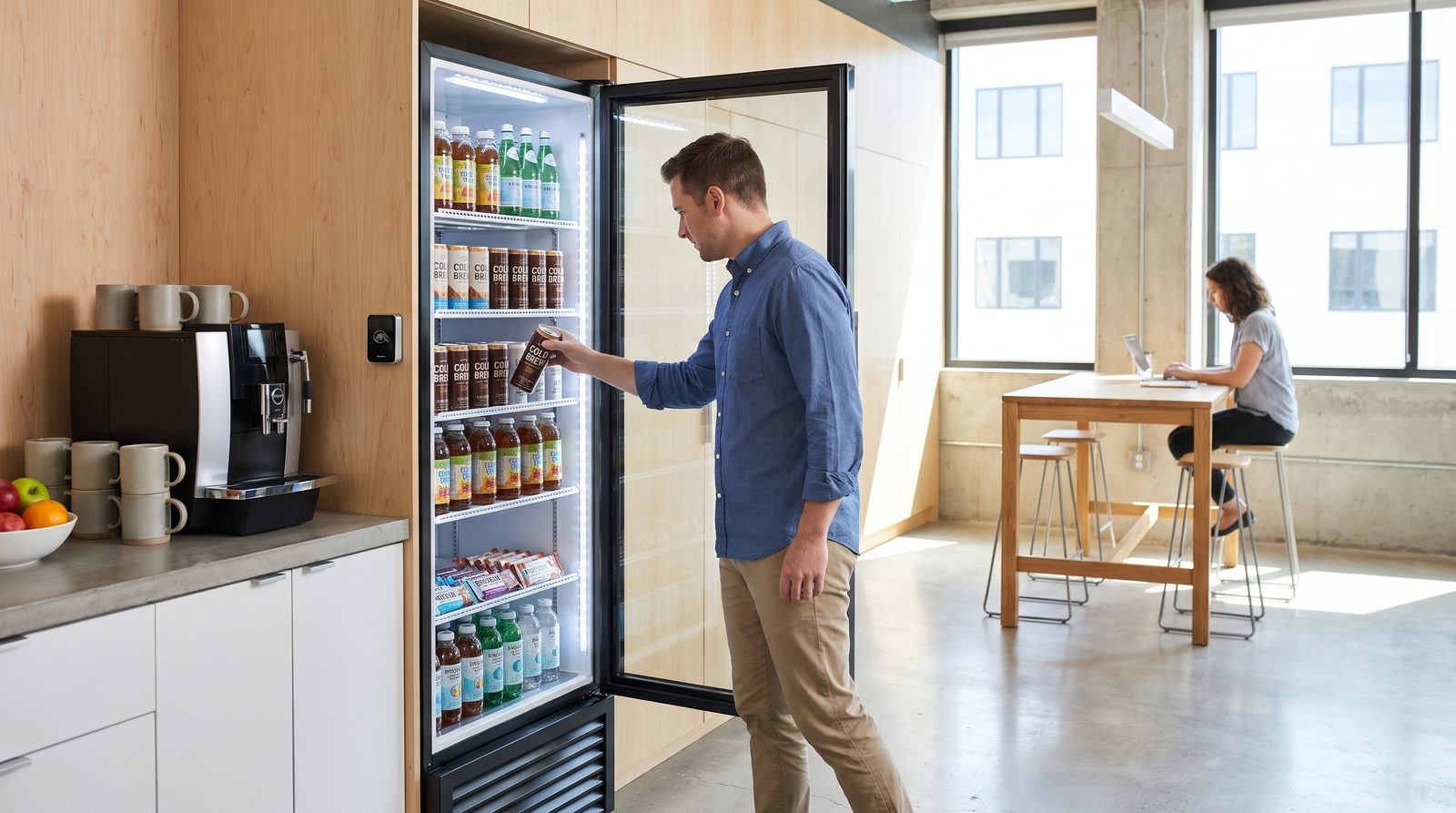
We stock smart coolers and micro-markets in office buildings across Bergen and Hudson counties, and the beverage data tells a clear story. Cold brew and energy drinks spike twice: once around 8:30 AM (the overcaffeinated first wave) and again around 2:30 PM (the crash correction). Water, sparkling water, and decaf options barely move in the morning but climb steadily after lunch.
HR and wellness leads can actually use that pattern. A few things that work:
- Stock the 10 AM window. Make sure cold brew, nitro, and quality coffee drinks are available and visible mid-morning, not just at 8 AM when people are still clearing their inbox. The second cup is often the smarter cup.
- Give the 2 PM crowd a real alternative. Sparkling water, kombucha, protein drinks, and low-caffeine green tea beat another energy drink for sustained focus. If the fridge only offers caffeine, people pick caffeine.
- Keep decaf cold brew in the mix. It sounds pointless, but afternoon drinkers often want the ritual of coffee, not the stimulant. Decaf cold brew moves faster than people expect once it’s an option.
The Hydration Angle
Caffeine is a mild diuretic, and most office workers in Midtown and Jersey City run slightly dehydrated by mid-afternoon — which feels exactly like caffeine withdrawal. The fix is often a bottle of water, not another coffee. Any break room that makes water harder to grab than coffee is working against its own productivity goals.
A Simple Policy That Actually Helps
If you’re an HR or facilities lead thinking about this, you don’t need a mandate. You need the right inventory and placement. A few concrete moves:
- Put water and sparkling water at eye level in the cooler. Energy drinks lower.
- Make sure caffeinated and non-caffeinated options are visually balanced — not a wall of Red Bull with one lonely LaCroix.
- Rotate in afternoon-friendly options: electrolyte drinks, light teas, flavored seltzers.
None of this requires an all-staff memo about caffeine. It’s just a smarter stock list. If you’re thinking about how your current break room setup is shaping these habits, our vending and micro-market services are built around this kind of practical, data-driven product mix for offices in the Bergen–Hudson–NYC area.
Coffee culture isn’t going anywhere in this region. But a break room that quietly supports better timing — more options at 10 AM, better alternatives at 2 PM — does more for productivity than another wellness email ever will.