
The Short Answer Nobody Wants to Give You
If you’re a small business owner Googling vending machine cost for an office, you’ve probably seen prices ranging from $1,500 to $10,000 and walked away more confused than when you started. The honest truth: for most offices in Bergen and Hudson County, the right answer is $0 out of pocket. But that depends on your headcount, your building, and what you’re trying to solve. Let me walk you through how the math actually works from someone who places this equipment for a living.
The Three Real Cost Paths
1. Buying a Machine Outright
If you want to own the equipment and stock it yourself, a new smart cooler runs roughly $4,000 to $8,000. A used unit can be found for $1,500 to $3,000, but you’re inheriting someone else’s maintenance history. Then add:
- Payment processing hardware: $300–$600 for a contactless reader
- Monthly processing fees: 3–6% of sales plus a $10–$15 gateway fee
- Electricity: $20–$40 per month for a refrigerated unit
- Restocking labor: Someone on your team driving to Costco weekly
- Spoilage: Expect to throw out 5–10% of fresh items until you nail demand
This path makes sense if you have a very specific product mix in mind (kombucha-only, dietary-restricted snacks, etc.) and someone willing to babysit it.
2. Leasing or Renting
Some operators charge $50–$150 per month for the machine itself, then you still buy product and split revenue. Honestly, this is the worst of both worlds for most small offices. You’re paying a fee AND doing the work. I’d skip this unless your headcount is too small for free placement but you really want the amenity.
3. Free Placement (Full-Service Vending)
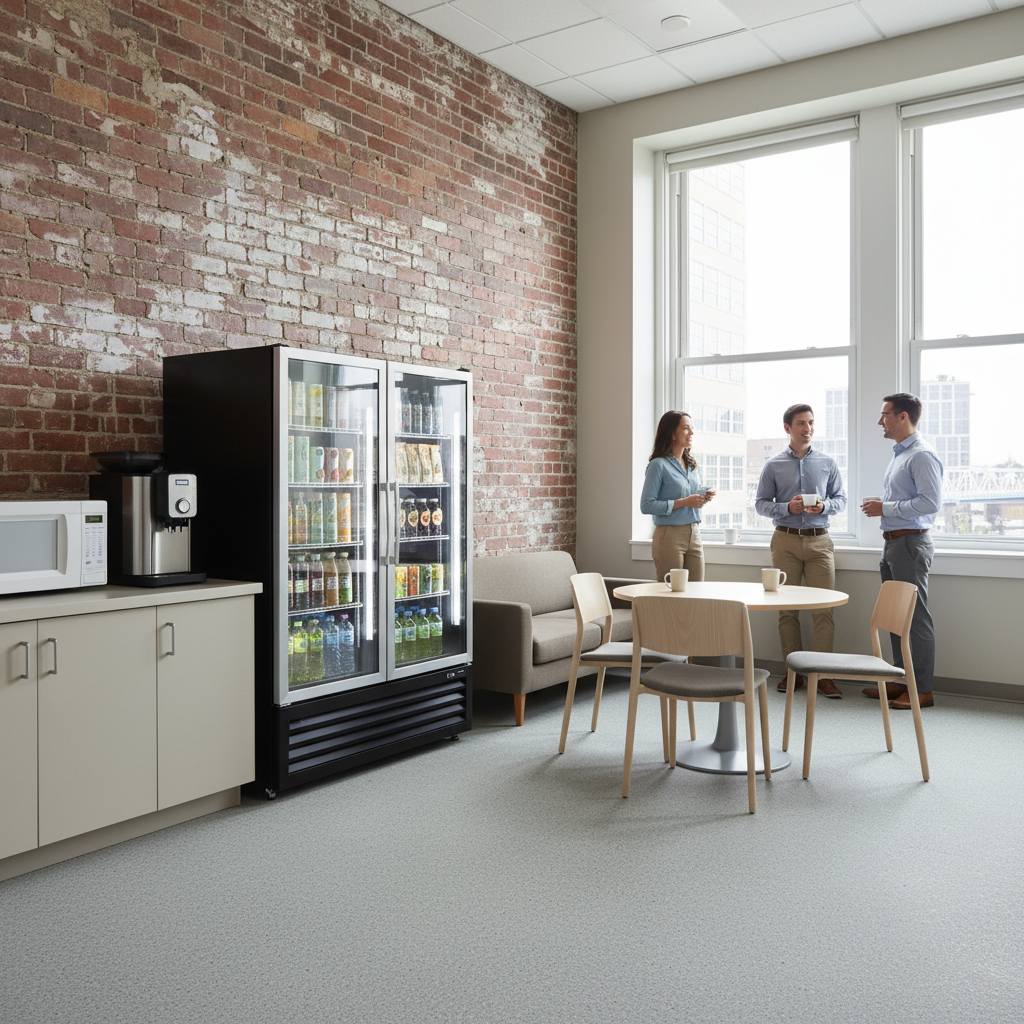
This is what most offices in NJ end up choosing. The provider supplies the equipment, stocks it, services it, and takes the revenue from sales. You pay nothing. Employees pay market prices via tap-to-pay on the cooler door. You can learn more about how this works on our services page.
What NJ Office Buildings Actually Look Like
Here’s where generic articles fail you. The cost equation depends heavily on your specific building. A few real-world examples from our service area:
- Cliffside Park and Fort Lee mid-rise offices (20–60 employees): A single smart cooler placed in the break room. Free placement is almost always viable here.
- Hoboken converted-warehouse coworking spaces: Higher foot traffic, often supports a micro market with snacks, drinks, and grab-and-go meals.
- Jersey City class-A towers near Exchange Place: Multi-tenant floors usually justify a micro market in the amenity floor.
- Paramus office parks: Trickier — long, low buildings with departments scattered across wings. Sometimes two small coolers beats one big setup.
The actionable insight most operators won’t tell you: the break-even threshold for free placement is usually around 25–35 daily users, not 25–35 employees. A 60-person office where everyone leaves for lunch and brings their own coffee may underperform a 30-person office where people stay onsite all day. Count the people who actually consume something from a fridge during a typical Tuesday — that’s your real number.
Hidden Costs Nobody Mentions
Even with free placement, watch for these gotchas in contracts:
- Electricity: You’re providing the outlet. Roughly $25/month on your bill.
- Minimum sales clauses: Some operators will pull the machine if it doesn’t hit a threshold. Ask upfront.
- Exclusivity language: Read this carefully if you also want a coffee service from a different vendor.
- Restock frequency: Once a week is standard. Twice a week should be available for higher-volume sites.
So What Should You Actually Budget?
For a small business owner with 25+ employees onsite most days in Bergen or Hudson County, your realistic budget is:
- Equipment cost: $0
- Installation: $0
- Restocking: $0 (handled by the operator)
- Your monthly cost: Roughly $25 in electricity
For offices under 20 employees, or in less-trafficked locations, you may need to consider a paid arrangement or a subsidized model where the employer covers a portion of items to keep prices lower and drive usage.
The Honest Recommendation
Before signing anything, walk your office during lunch hour and count how many people are actually around. Then ask any operator three questions: What’s your minimum site size? What happens if sales fall below your threshold? How often will you restock? If you’d like a straight answer for your specific space, get in touch and we’ll tell you honestly whether free placement makes sense or whether you’re better off with a different setup.