
The 2 AM Problem Every Hotel Manager Knows
A guest checks in at 11 PM after a delayed flight to LGA. By 1 AM they’re hungry, the restaurant closed at 10, room service stopped at midnight, and the nearest bodega is six blocks away in the rain. They call the front desk. Your overnight clerk apologizes. The guest writes a one-star review about “limited food options” the next morning.
I’ve seen this pattern at hotels from Midtown Manhattan to the Jersey City waterfront, and it’s the single biggest reason hotel managers reach out to us. The old answer was a snack vending machine with spiral coils in a back hallway near the ice machine. That answer doesn’t work anymore — guests don’t carry singles, half the selections jam, and the limited capacity means you’re stocking chips and candy with nothing a tired business traveler actually wants at midnight.
What a Modern Hotel Vending Machine in NYC Looks Like
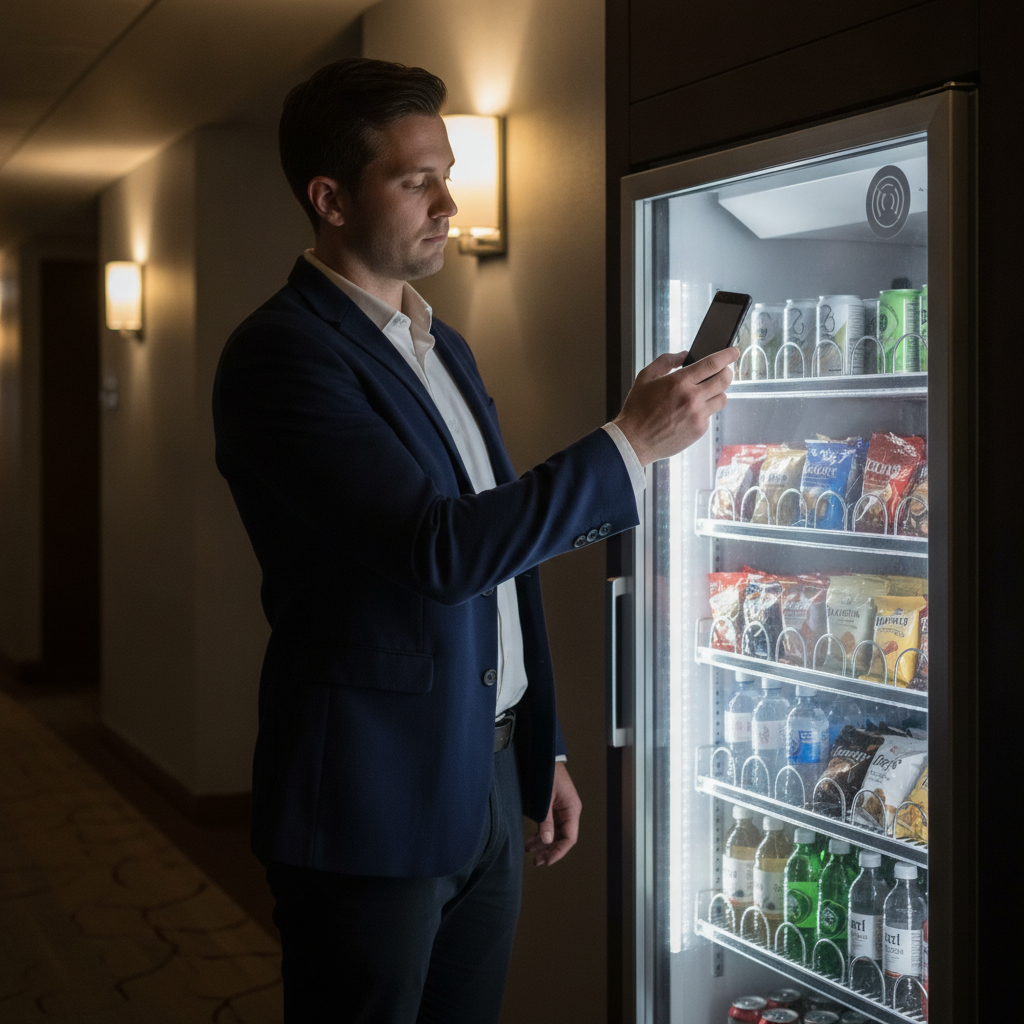
The equipment we install in Manhattan hotels and on the Hudson waterfront isn’t a vending machine in the traditional sense. It’s a smart cooler: a glass-door refrigerator with a contactless payment reader on the frame. The guest taps their credit card or phone, the door unlocks, they grab a sandwich, a cold brew, a protein bar, a bottle of wine — whatever you’ve stocked — and the door closes. Sensors detect what was taken and charge the card automatically.
Three things matter for hotels specifically:
- Capacity is 3–5x a traditional machine. A double-door smart cooler holds enough variety that a 200-room property doesn’t sell out by Friday night.
- You can stock real food. Fresh wraps, yogurt parfaits, hummus cups, hard-boiled eggs, sushi from a local supplier. Not just shelf-stable junk.
- Cashless only. Every guest can pay. No “do you have change for a twenty” conversations with your front desk at 3 AM.
Midtown vs. Jersey City: Different Guests, Different Stock
The hotels we serve in Midtown Manhattan — the cluster around Times Square, Herald Square, and the Penn Station corridor — skew toward international leisure travelers and short-stay business guests. What sells in those properties: bottled water (huge volume), premium cold brew and energy drinks, fresh fruit cups, single-serve wine and craft beer where the license allows, and grab-and-go breakfast items between 6 and 9 AM.
Jersey City waterfront hotels — the Exchange Place and Newport properties especially — see a different mix. More extended-stay corporate guests doing weeks in finance or pharma. They want real meals: salads, microwaveable entrees, Greek yogurt, almond milk for the coffee in the room. They also buy a lot of late-night snacks after dinner meetings in Manhattan because they don’t want to walk to a store after the PATH ride home.
The actionable insight most hotels miss
Put the cooler in the lobby, not the hallway. Every hotel I’ve worked with that moved the unit from a tucked-away corridor to a visible spot near the elevators or check-in saw sales jump significantly — often double. Guests don’t go looking for vending. They buy when they see it on the way to their room. If you’re worried about aesthetics, the units are modern glass-front coolers that look more like a hotel mini-bar display than the beige boxes managers remember.
Cost to the Hotel: Zero
This is the part hotel managers don’t always believe at first. Our full-service vending model means we own the equipment, we stock it, we handle the cashless payment processing, we replace expired product, and we service it. The hotel provides the floor space and a standard outlet. That’s it. There’s no lease, no maintenance contract, no stocking labor on your housekeeping team.
You can also negotiate a revenue share once the unit hits a volume threshold — which most lobby placements in Bergen, Hudson, or Manhattan properties do within the first 90 days.
What to Ask Before You Sign With Anyone
- Service frequency. A Midtown hotel needs restocking 2–3 times a week minimum. Confirm the route schedule.
- Fresh food handling. Ask who pulls expired product and how often. If the answer is vague, walk away.
- Remote monitoring. The cooler should report inventory and temperature in real time. If a compressor fails at 2 AM on a Saturday, the operator should know before your front desk does.
- Payment failures. What happens when a guest’s card declines or the reader goes offline? There should be a 24/7 support number printed on the unit.
Where to Start
If you manage a property in Manhattan, Jersey City, Hoboken, Weehawken, Fort Lee, or anywhere within a 30-mile radius of Cliffside Park, the install timeline is usually 2–3 weeks from first conversation to a stocked, running cooler in your lobby. The guest experience upgrade is immediate, and you stop losing reviews to the 2 AM hunger problem.