
If you manage a residential high-rise along the Hudson Palisades, you already know the amenity arms race is real. Lobbies have package lockers, fitness rooms have Peloton bikes, and lounges have coffee bars. But there’s a gap that residents complain about constantly: the 11pm snack run. When the nearest bodega is a five-minute walk down Anderson Avenue or Palisade, a well-stocked vending setup inside the building isn’t a luxury — it’s a quality-of-life feature.
We’ve been installing and operating smart vending machines in apartment buildings across NJ for years now, and the residential use case is genuinely different from offices or hospitals. Here’s what property managers in Bergen and Hudson County should actually know before signing a contract.
Why Residential Vending Looks Different from Office Vending
Office vending is predictable: weekday lunch traffic, Monday-Friday restocks, and a customer base of maybe 100 people. A high-rise apartment building is the opposite — traffic spikes between 9pm and 1am, weekends are heavier than weekdays, and the resident mix can be 300+ households with wildly different tastes.
The buildings we serve in Cliffside Park, Fort Lee, and Edgewater high-rise apartments have taught us a few specific patterns:
- Late-night demand is real. In Fort Lee buildings near Bridge Plaza, we see the largest single sales window from 10pm to 1am — well after any staffed amenity is closed.
- Beverage mix skews international. Cliffside Park and Edgewater have large Korean, Japanese, and Latin American resident populations. Stocking only domestic sodas leaves money on the table. Aloe drinks, Yakult-style probiotics, and Jarritos move faster here than Mountain Dew.
- Healthy options actually sell. Unlike offices where impulse junk food wins, residents buying for their own homes pick protein bars, sparkling water, and fresh-style snacks at a much higher rate.
The Right Equipment for a Residential Lobby or Amenity Floor
Most older vending machines are eyesores — bright wraps, fluorescent lighting, coin slots. That’s a non-starter in a Class A building. Modern smart vending machines look more like a sleek kiosk: matte finish, LED-lit shelves, large touchscreen, tap-to-pay only (no cash).
What to specify
- Contactless payment only. Apple Pay, Google Pay, tap card. No cash means no break-ins, no service calls for jammed bills, and no after-hours liability.
- Remote inventory monitoring. The operator should see stock levels in real time and restock before items run out — not on a fixed Tuesday schedule.
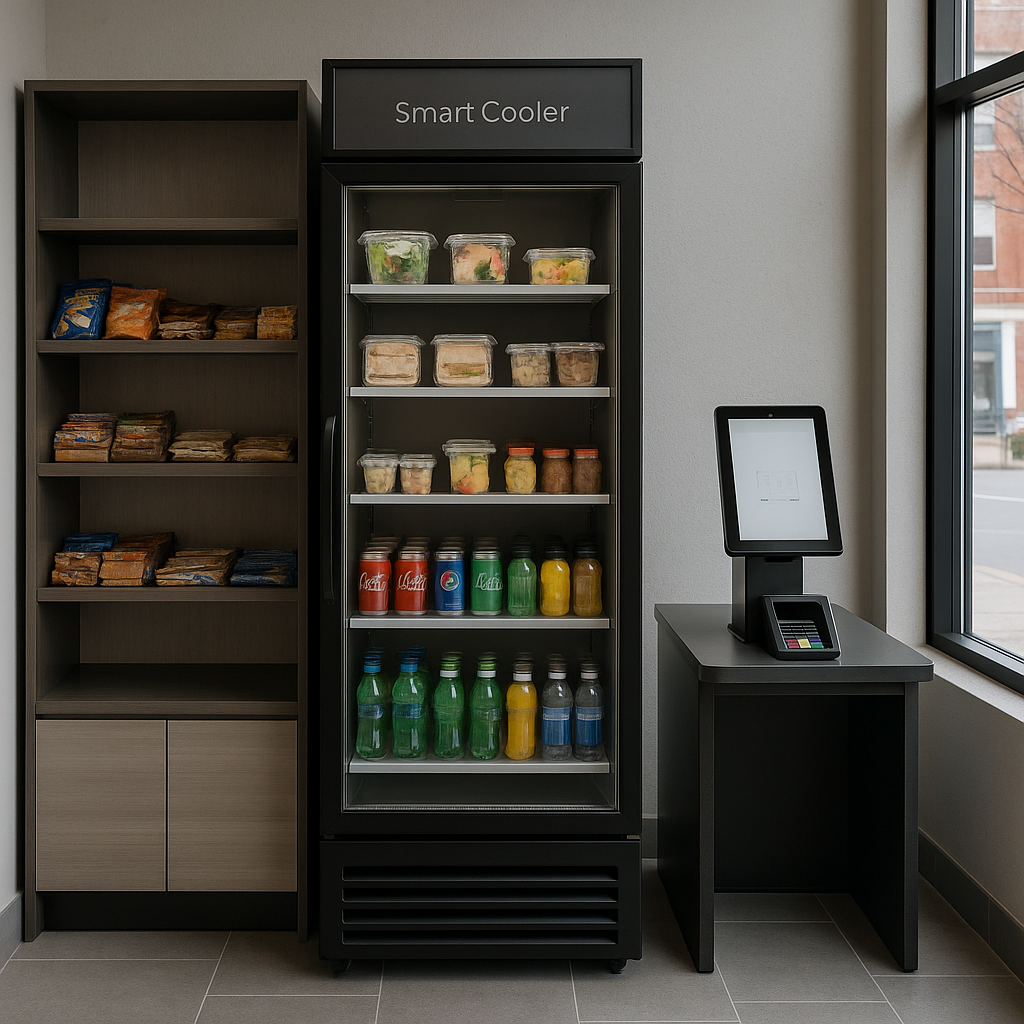
- Refrigerated combo units or smart coolers. A single combo machine handles snacks plus drinks; a smart cooler (grab-and-go with a camera that charges your card on close) works better if you have space for a small micro market on an amenity floor.
- Quiet compressors. Older machines hum loudly enough to generate noise complaints from units near the mail room. Newer equipment runs nearly silent.
How the Economics Work for Property Managers
This is the part most managers get wrong on the first call. You shouldn’t be paying for the machine, paying for the product, or paying for service. A legitimate operator places the equipment at no cost, stocks it, services it, and either pays the building a commission or simply provides the amenity at no cost in exchange for the location.
For most residential buildings under 200 units, commission models don’t generate meaningful income — we’re talking a few hundred dollars a year. The real value is the amenity itself: fewer resident complaints, a checkbox on the leasing tour, and a service that runs 24/7 without staff. That’s how we structure most of our vending and micro-market services for residential clients.
Common placement mistakes
- Putting it in the parking garage. Foot traffic is too low. Lobby, mail room, or amenity floor outperforms garage placement 4 to 1.
- One machine for a 400-unit tower. If you have multiple lobbies or towers, each needs its own machine. Residents won’t cross the property for a snack.
- Ignoring power and data. Smart machines need a standard 110V outlet and either cellular or Wi-Fi. Cellular is almost always better — it avoids ever touching your building’s network.
What Installation Actually Looks Like
For a typical building in our Cliffside Park service area, the timeline from signed agreement to a stocked, operational machine is usually two to three weeks. We handle delivery (after-hours if your loading dock requires it), electrical plug-in, network setup, initial stocking, and signage. Service visits are typically once or twice a week depending on volume, and we adjust the product mix every 30 days based on what’s actually selling in your specific building.
If you manage a property along the Gold Coast and want to evaluate whether a smart vending setup fits your amenity strategy, the easiest first step is a walkthrough. We’ll measure the space, look at resident demographics, and tell you honestly whether the volume will justify the install.