
The River Road Problem Nobody Talks About
If you run HR or facilities for a big-box store on the River Road corridor in Edgewater — anywhere from the Whole Foods and Target cluster down past Mitsuwa Marketplace toward the Edgewater Commons shopping center — you already know the break room challenge. You’ve got 80 to 250 associates working staggered shifts, a 30-minute meal window, and the nearest hot lunch option is a congested left turn onto a two-lane road that backs up every afternoon.
That geography is the whole problem. Associates can’t realistically leave the property on a half-hour break, especially during the holiday push or weekend rushes. So the break room becomes the only option — and most retail break rooms along that corridor were designed for coffee and a microwave, nothing more.
What Big-Box Retail Break Rooms Actually Need
I’ve walked a lot of these back-of-house areas. The pattern repeats itself: a vending machine from 2008 that eats dollar bills, a dusty snack rack, and a fridge full of forgotten yogurt. Associates skip meals or grab chips because that’s what’s available.
What retail HR teams actually need from an Edgewater break room setup:
- Real meals, not just snacks. Sandwiches, salads, burritos, protein bowls — things that count as lunch for someone on a 6-hour shift.
- 24/7 access. Overnight stocking crews and 5 AM openers need the same options as the 2 PM floor staff.
- Tap-to-pay only. Nobody carries cash. If a reader rejects a card, associates stop using it within a week.
- Zero management overhead. Store managers are not going to track inventory or handle refund requests.
Why Smart Coolers Fit Retail Better Than Traditional Vending
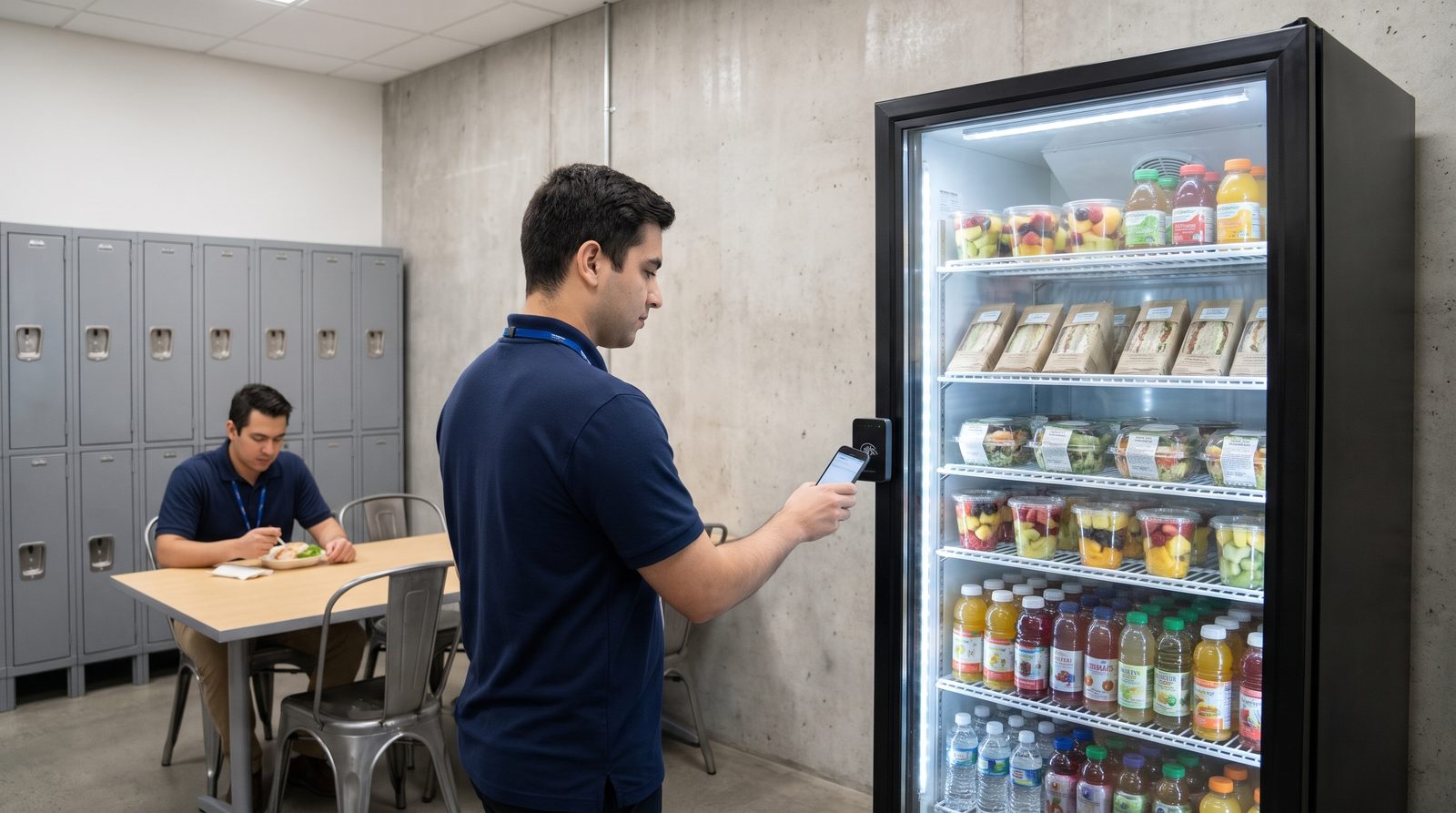
The spiral-coil snack machine was built for a different era. For a retail break room running three shifts, the better fit is a smart cooler — a glass-door refrigerator with a small tap-to-pay reader on the frame. The associate taps a card or phone, the door unlocks, they grab a sandwich or a cold brew, close the door, and get charged for what they took. No selection buttons. No stuck items. No line forming behind one person trying to figure out the keypad.
The practical benefit for a 150-person store: four people can be grabbing items at once from a double-door cooler without a bottleneck. On a Black Friday or back-to-school weekend, that matters.
The Micro Market Option for Larger Locations
Stores north of 200 associates — think the bigger footprints near the Mitsuwa Marketplace area — often make more sense as a full micro market. That means pairing smart coolers with open wood shelving for shelf-stable snacks, a coffee setup, and one self-checkout kiosk. It converts the break room into something closer to a small convenience store, which is honestly what a big retail workforce needs.
A micro market also lets you expand the product range significantly: fresh fruit, overnight oats, cold brew, better-for-you protein options alongside the traditional chips and candy. For retailers who are themselves selling wellness products on the sales floor, having a break room that reflects those values isn’t a small thing when it comes to associate retention.
What It Costs the Store
This is the part retail facility managers usually don’t believe the first time: there’s no cost to the store. We install the equipment, stock it, service it, and handle every transaction. The store provides the floor space, a standard outlet, and WiFi. That’s the entire ask. Details on how the service model works are on the site, but the short version is that the vending operator makes money on product sales, not on charging the location.
Logistics Along the Corridor
One operational note specific to this stretch of Edgewater: River Road service windows matter. Delivery trucks competing with shopper traffic in the Edgewater Commons and Mitsuwa parking lots can turn a 20-minute restock into an hour. We schedule most River Road service runs before 10 AM or after 7 PM for exactly this reason, which also keeps our drivers out of the way of your receiving dock during peak delivery hours.
Getting Started
If you’re a district or store-level manager along the River Road corridor and your current break room setup is doing more harm than good for associate satisfaction, the first step is just a walkthrough. We measure the space, look at your shift patterns and headcount, and come back with a proposal for either a smart cooler setup, a micro market, or a combination. No contracts to review before you’ve seen the plan.
Break rooms are one of the cheapest retention tools a retail operation has. In a tight Bergen County labor market, that math is worth running.