
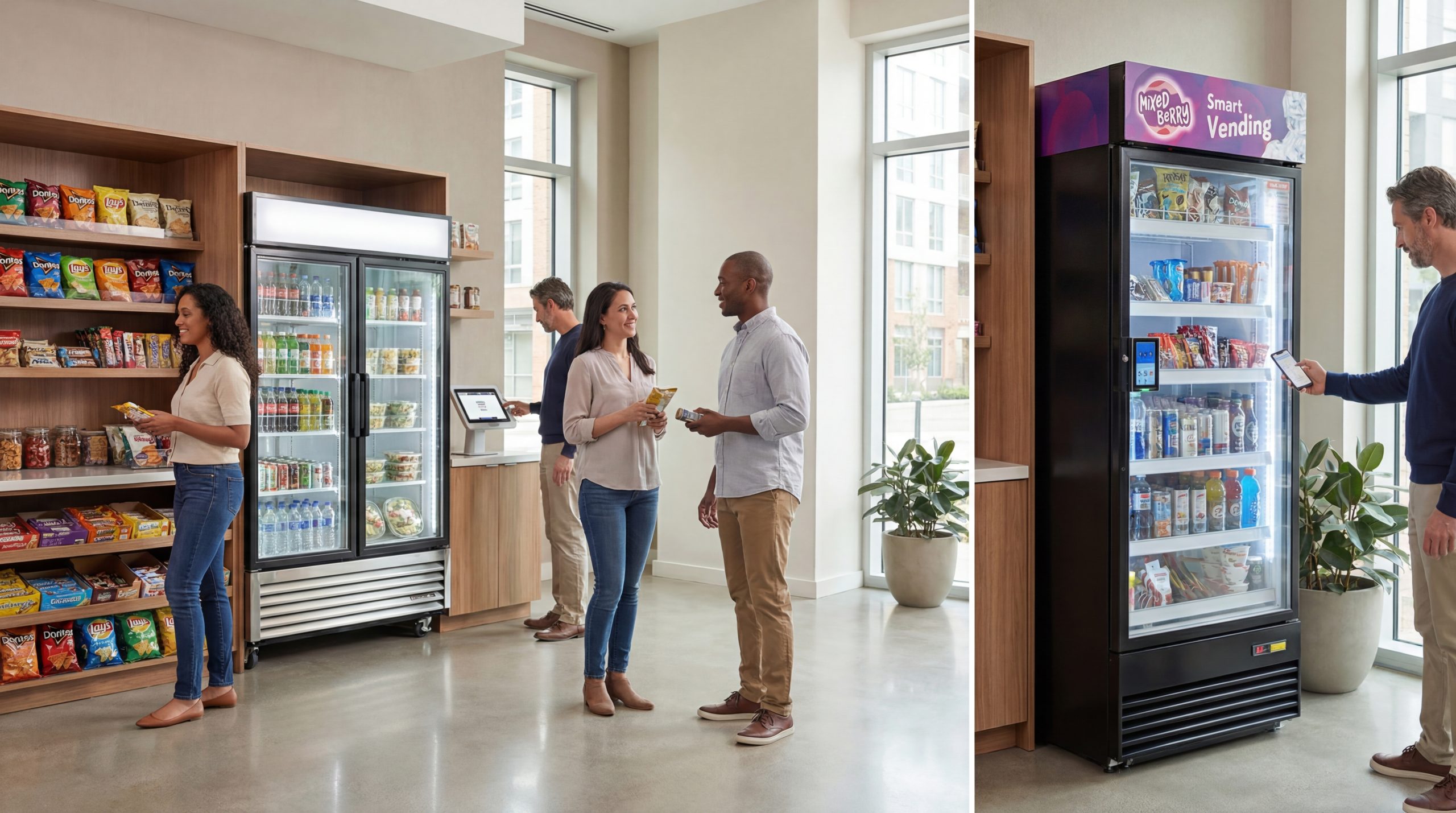
When you are looking to add convenient snacks and drinks to your building, you will usually end up comparing two popular options: a micro market or a smart vending machine (often a smart cooler). Both can be great amenities, but they are not the same thing and they work best in different types of locations.
What Is a Micro Market?
A micro market is a small self-service shop that usually includes open shelves, coolers, and a self-checkout kiosk where people scan and pay for items. It feels like a mini convenience store right inside your building.
Because items are on open shelves, micro markets are ideal for larger product selections and fresh options like salads, yogurt, and meals. They work best in secure environments with consistent traffic, such as corporate offices or large facilities where employees are already badged in.
What Is a Smart Vending Machine?
A smart vending machine or smart cooler is a high tech fridge or freezer with a built in payment system and product recognition technology. Customers tap or swipe to unlock the door, grab what they want, and close it. AI and cameras identify the products and charge the card automatically.
Smart coolers typically:
- Take up less space than a micro market
- Offer more flexibility than traditional coil vending
- Support fully cashless payments
- Use remote monitoring so operators always know stock levels
They are a great fit for locations that want a modern amenity but do not have room for a full market.
Footprint and Space Requirements
- Micro market: Needs wall space for shelving, at least one cooler, and room in front for people to shop and queue at the kiosk. Best for medium to large break rooms or lobbies.
- Smart vending: Usually one smart cooler, sometimes paired with a small snack rack. Fits into tighter areas like hallways, laundry rooms, small tenant lounges, or near elevators.
If your property has limited space, a smart cooler is usually the easier starting point.
Product Variety and Flexibility
- Micro market: Maximum variety. You can mix snacks, fresh food, frozen food, and everyday essentials. It feels closest to a small store.
- Smart vending: More flexible than a traditional vending machine and not limited by coils, so you can offer larger bottles, meal boxes, and specialty items.
For many apartments, gyms, and offices, a smart cooler offers more than enough range without the complexity of a full market.
Security and Shrinkage
Because micro markets are open shelf, they rely on cameras, access control, and an honor system. In secure workplaces this works very well, but in open public areas it can mean more shrinkage.
Smart vending coolers stay locked until a valid payment method is presented. The door locks again at the end of a session, which gives an extra level of control and reduces unpaid items.
Setup, Maintenance, and Cost
- Micro market: Higher setup effort, more fixtures, and usually a kiosk plus multiple coolers. Best when you already know you have significant daily traffic.
- Smart vending: Faster to install, typically needs only standard power and data. Remote monitoring keeps it stocked without unnecessary visits.
For property managers who want to test an amenity first, a smart vending machine is often the lower risk way to start.
Which Option Is Right For You?
Choose a micro market if:
- You have 100+ daily users in a secure space
- You want a true mini shop feel with maximum variety
- You have room for shelves, multiple coolers, and a kiosk
Choose a smart vending machine if:
- Space is limited
- You want quick installation with minimal disruption
- Your property is semi public or you are concerned about shrinkage
- You want a modern, cashless amenity with simple management
For many offices, apartments, and gyms, starting with a smart cooler and expanding to a micro market later is the ideal path.